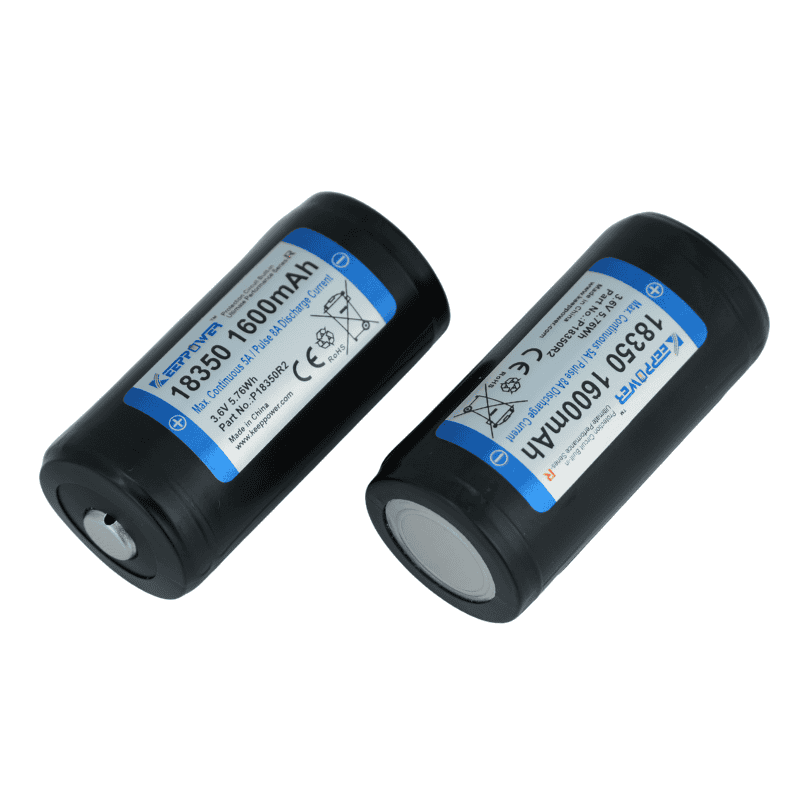
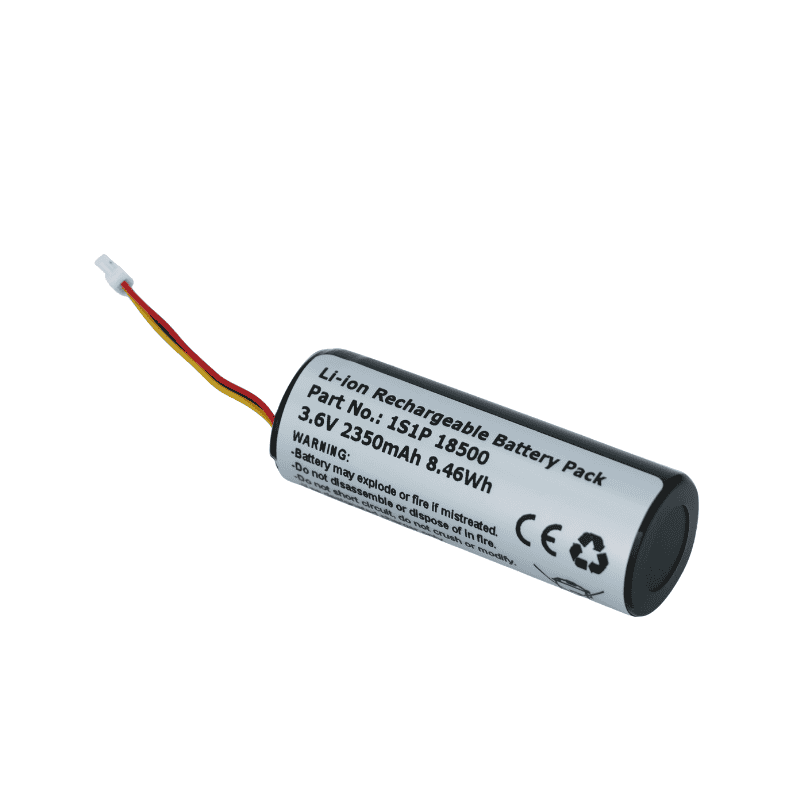
In lithium battery pack notation, S describes the number of cell groups connected in series, while P describes how many cells are connected in parallel within each series group. A 1S1P pack contains one cell. A 2S1P pack uses two cells in series. A 4S2P pack has four series groups, with two cells in parallel in each group, for a total of eight cells.
Series increases voltage. Parallel increases capacity and can share current when designed correctly. Energy rises whenever total cell count rises, but the voltage and current path change differently. Understanding this distinction is essential for choosing chargers, BMS hardware, コネクタ, and device electronics.

What S and P mean
For identical cells, series voltage adds while ampere-hour capacity remains that of one parallel group. Four nominal 3.6 V cells in series create a nominal 14.4 V pack. In parallel, voltage stays the same while ampere-hours add: two 3 Ah cells in parallel form a nominal 3.6 V, 6 Ah group.
The pack’s maximum charge voltage also adds in series. A conventional 4.2 V maximum cell becomes 8.4 V in 2S, 12.6 V in 3S, そして 16.8 V in 4S. This is why a charger and BMS must match the exact series count. Connecting a 4S pack to a 3S charger or protection board is unsafe and incorrect.
Specifications that matter in the real device
Define nominal voltage, maximum charge voltage, minimum operating voltage, 容量, energy, continuous current, ピーク電流, cell count, and mechanical arrangement. Parallel current sharing depends on matched cells and low, balanced interconnect resistance. Series strings require monitoring because the weakest group can reach voltage limits first.
A BMS or PCM may provide overcharge, 過剰充電, 過電流, 短絡, 温度, and balancing functions depending on design. The number of sense connections and the wiring order are specific to the series count. Fuses, 絶縁, spacing, and connector ratings remain necessary parts of the safety architecture.
| Configuration | Nominal effect | Example with 3 Ah cells |
|---|---|---|
| 1S1P | Base voltage and capacity | 3.6 V, 3 ああ |
| 2S1P | Twice voltage | 7.2 V, 3 ああ |
| 1S2P | Twice capacity | 3.6 V, 6 ああ |
| 4S2P | Four times voltage, twice capacity | 14.4 V, 6 ああ |

How to make the right choice
Choose series count from the device voltage and power-conversion design. A higher pack voltage can reduce current for the same power, but it changes insulation, component ratings, charger requirements, and regulatory considerations. Choose parallel count from energy, ランタイム, 現在, 空間, and thermal needs.
Do not add cells casually to an existing design. Increasing series count can damage the load; increasing parallel count changes fault energy, charge time, pack geometry, and current-sharing behavior. Any configuration change requires electrical and mechanical review.
Common mistakes to avoid
A frequent error is adding ampere-hours in series. Another is assuming that parallel cells automatically share equally despite differences in resistance, 温度, or state of charge. Never connect unmatched cells or packs in parallel without a controlled design.
Incorrect BMS wiring can damage electronics or leave cells unprotected. Follow the exact connection sequence and diagram for the pack design. End users should not assemble or repair lithium-ion packs unless trained and authorized for the specific system.
Application and OEM considerations
A 1S pack suits low-voltage electronics and power-bank style conversion. Two- and three-series packs appear in instruments, 点灯, and compact equipment. Four-series packs can serve 14.4/14.8 V nominal systems such as portable devices and robotics. The application still determines chemistry, cell format, and current capability.
OEM designers should model fault current, heat generation, cell spacing, enclosure venting, connector touch safety, service procedure, transport condition, and charging. Production requires cell matching, traceability, weld control, insulation inspection, and end-of-line testing.

Worked example
A device needs 60 W from a 4S nominal 14.4 V pack. Ignoring losses, current is about 4.2 あ. If runtime requires 86 WH, a 4S2P design using 3 Ah cells provides roughly 86.4 Wh nominal. The engineering team must still confirm that each cell group, BMS, weld, wire, and connector supports continuous and peak current with adequate margin.
安全性, verification, and purchasing discipline
Battery selection should never be based on the largest capacity number alone. Confirm the device manufacturer’s permitted chemistry, nominal voltage, maximum charge voltage, 極性, terminal style, physical envelope, and continuous and peak-current requirements. A cell that fits mechanically can still be electrically wrong. For series and parallel battery packs, the safest approach is to treat the equipment manual and the battery data sheet as a matched pair rather than assuming that two cells with similar names are interchangeable.
Buy from a traceable supplier and review the current specification sheet, protection details, test documentation, and transport information for the exact model. Keep cells away from loose metal objects, water, crushing, 穿刺, excessive heat, and unauthorized modification. Stop using a battery that becomes unusually hot, swollen, dented, corroded, leaking, or mechanically damaged. Use a compatible charger and never exceed the stated charge current or voltage. These practices support reliable operation but do not replace the instructions supplied with the device, charger, or battery.
A practical selection workflow
- Start with the load. Record nominal voltage, operating current, ピーク電流, ランタイムターゲット, and duty cycle.
- Check the compartment. Measure usable diameter, 長さ, connector clearance, terminal type, and spring compression.
- Choose the safety architecture. Decide whether the application expects a protected cell, an unprotected cell managed by the host, or a complete pack with a BMS or PCM.
- Match charging. Verify chemistry, maximum charge voltage, charge current, termination method, and temperature limits.
- Validate the real system. Test representative batteries in the final device across the expected temperature and load range before approving production.
This workflow is particularly important for OEM programs. Battery behavior depends on the interaction among cell chemistry, protection electronics, mechanical packaging, firmware, 充電, and the user environment. Early validation is less expensive than redesigning a battery compartment or power stage after tooling is complete.
Frequently asked questions
Does series increase capacity in Ah?
いいえ. Series increases voltage; Ah remains the capacity of one parallel group.
Does parallel increase voltage?
いいえ. Parallel increases Ah and potential current sharing while voltage remains that of one group.
What does 4S2P mean?
Four groups are connected in series and each group contains two parallel cells, for eight cells total.
Can I use the same charger for 3S and 4S packs?
いいえ. The charger and protection system must match the exact chemistry and series count.
Related Keeppower resources
- Customized battery packs
- Accessories and protection PCBs
- 保護されています 18650 電池
- 保護されています 21700 電池
- Selected cells
- Chargers and power banks
- Robot battery solutions
- Contact Keeppower
結論
Series and parallel connections change different properties: series raises voltage, while parallel raises ampere-hour capacity and shares current. Select S count from the device voltage and P count from energy and current requirements, then design the charger, BMS, interconnects, enclosure, and validation around the exact configuration.
Need help matching a battery to a device or developing an OEM solution? Contact Keeppower with the voltage, 現在, ランタイム, 寸法, コネクタ, 充電方法, and environmental requirements of your project.